
- posted: Aug. 06, 2025
Ingrown toenails are one of the most common foot problems we see at Suffolk Foot & Ankle. While they may start as a small irritation, they can quickly become painful and even infected if not treated. Knowing how they develop and what you can do to avoid them goes a long way toward keeping your feet healthy and comfortable.
Why Ingrown Toenails Happen
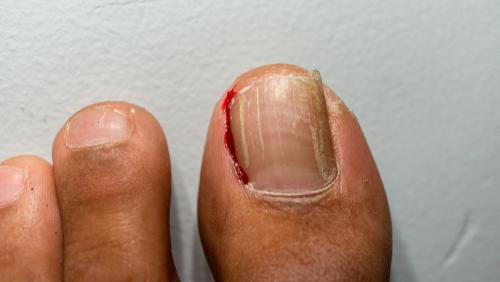
An ingrown toenail occurs when the edge of the nail grows into the surrounding skin instead of straight out. This usually affects the big toe but can occur on any toe. The most frequent cause is improper nail trimming, especially when the corners of the nails are cut too short or rounded, which allows the nail to curve inward as it grows.
Other common contributors include tight footwear, trauma to the toe (like stubbing or repeated pressure from running or sports), and genetic factors. Some people simply inherit a nail shape that’s more prone to becoming ingrown.
What You’ll Notice First
The early signs of an ingrown toenail include tenderness along the side of the nail, swelling, and redness. If the skin becomes broken or infected, you may see pus, increased warmth, or more intense pain. At that point, it’s best to avoid home treatments and have the podiatrists at Suffolk Foot & Ankle take a look.
Tips to Help You Avoid the Problem
Good foot care habits make a big difference. The most effective way to prevent ingrown toenails is to trim your nails straight across, never curved, and avoid cutting them too short. Make sure your shoes have enough room in the toe box so your toes aren’t cramped, and change your socks regularly to keep your feet dry and clean.
If you play sports, run frequently, or spend long hours on your feet, it’s a good idea to check your feet regularly for early signs of irritation. And if you’ve had ingrown nails in the past, don’t ignore even mild discomfort, as it’s more likely to happen again.
What We Can Do at Suffolk Foot & Ankle
If you’re dealing with an ingrown toenail that won’t improve, we’re here to help. At Suffolk Foot & Ankle, with locations in East Patchogue, Centereach, Riverhead, Medford, and Commack, our team offers careful evaluations and personalized treatment. In many cases, conservative care such as gentle trimming or soaking instructions can help resolve the issue. For more persistent or recurring cases, a minor in-office procedure can permanently correct the nail’s growth pattern.
You don’t need to live with the pain or risk of infection that comes from untreated toenail issues. If you’re noticing signs of an ingrown nail, call the Suffolk Foot & Ankle office nearest you and schedule a visit. We’re available at the following numbers:
East Patchogue – (631) 475-2900
Centereach – (631) 467-2813
Riverhead – (631) 727-7373
Medford – (631) 447-3668
Commack – (631) 486-3846
- posted: Aug. 06, 2025
Ingrown toenails are one of the most common foot problems we see at Suffolk Foot & Ankle. While they may start as a small irritation, they can quickly become painful and even infected if not treated. Knowing how they develop and what you can do to avoid them goes a long way toward keeping your feet healthy and comfortable.
Why Ingrown Toenails Happen
An ingrown toenail occurs when the edge of the nail grows into the surrounding skin instead of straight out. This usually affects the big toe but can occur on any toe. The most frequent cause is improper nail trimming, especially when the corners of the nails are cut too short or rounded, which allows the nail to curve inward as it grows.
Other common contributors include tight footwear, trauma to the toe (like stubbing or repeated pressure from running or sports), and genetic factors. Some people simply inherit a nail shape that’s more prone to becoming ingrown.
What You’ll Notice First
The early signs of an ingrown toenail include tenderness along the side of the nail, swelling, and redness. If the skin becomes broken or infected, you may see pus, increased warmth, or more intense pain. At that point, it’s best to avoid home treatments and have the podiatrists at Suffolk Foot & Ankle take a look.
Tips to Help You Avoid the Problem
Good foot care habits make a big difference. The most effective way to prevent ingrown toenails is to trim your nails straight across, never curved, and avoid cutting them too short. Make sure your shoes have enough room in the toe box so your toes aren’t cramped, and change your socks regularly to keep your feet dry and clean.
If you play sports, run frequently, or spend long hours on your feet, it’s a good idea to check your feet regularly for early signs of irritation. And if you’ve had ingrown nails in the past, don’t ignore even mild discomfort, as it’s more likely to happen again.
What We Can Do at Suffolk Foot & Ankle
If you’re dealing with an ingrown toenail that won’t improve, we’re here to help. At Suffolk Foot & Ankle, with locations in East Patchogue, Centereach, Riverhead, Medford, and Commack, our team offers careful evaluations and personalized treatment. In many cases, conservative care such as gentle trimming or soaking instructions can help resolve the issue. For more persistent or recurring cases, a minor in-office procedure can permanently correct the nail’s growth pattern.
You don’t need to live with the pain or risk of infection that comes from untreated toenail issues. If you’re noticing signs of an ingrown nail, call the Suffolk Foot & Ankle office nearest you and schedule a visit. We’re available at the following numbers:
East Patchogue – (631) 475-2900
Centereach – (631) 467-2813
Riverhead – (631) 727-7373
Medford – (631) 447-3668
Commack – (631) 486-3846